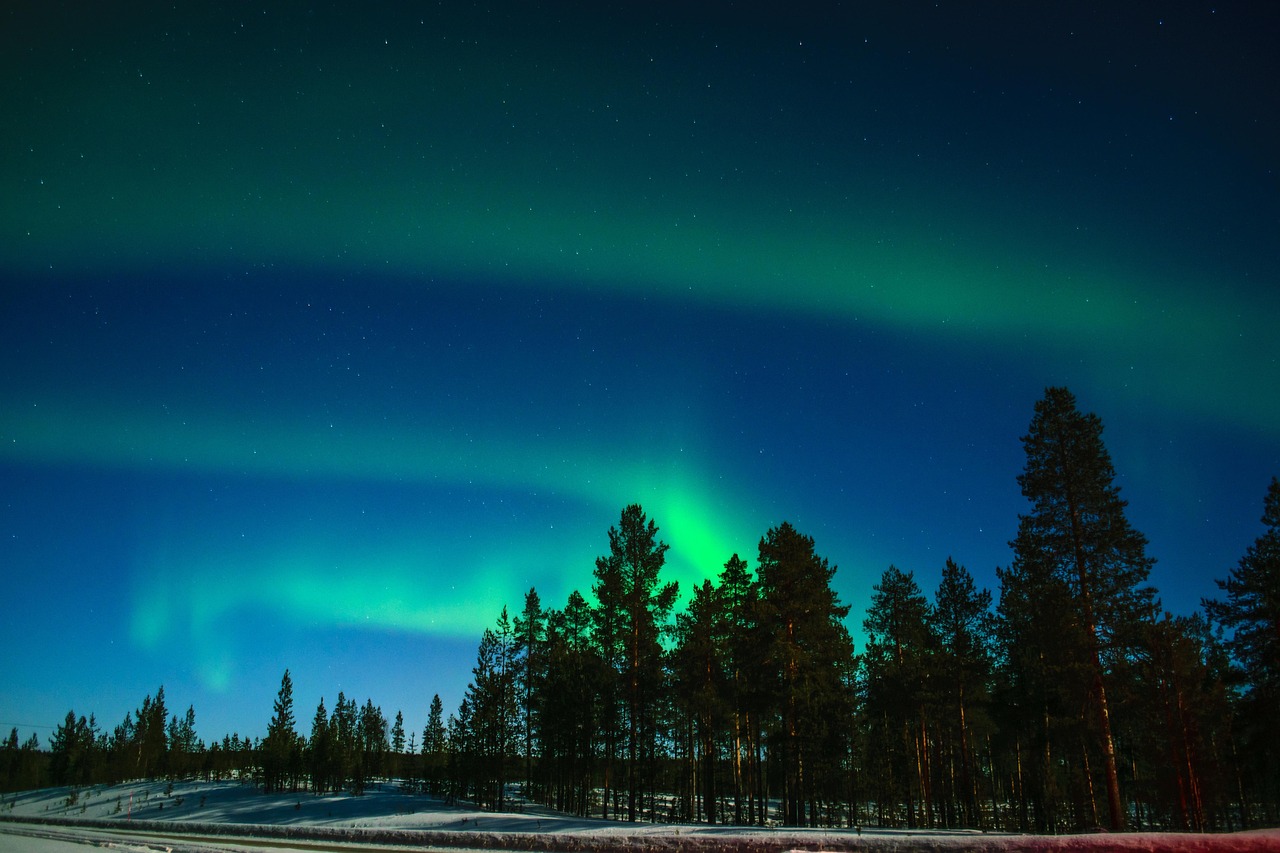
Northern lights in Lapland: Kp index, best hours and nights to plan for
Kp index, timing, moon, cloud: the four things that decide. Plus the truth nobody tells you about the gap between the brochure photos and what you will actually see.
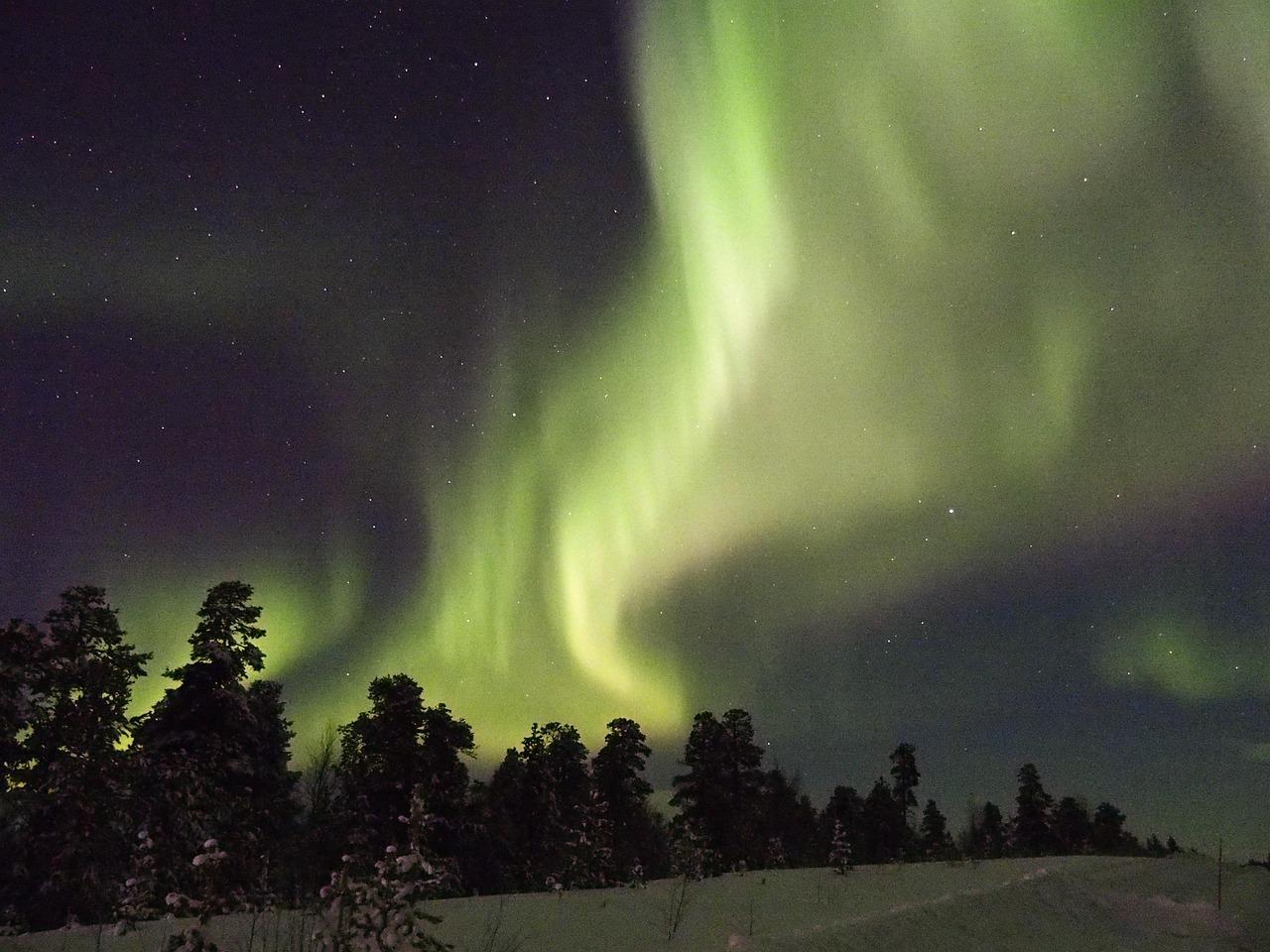
A display of northern lights cannot be ordered. It can only be prepared for, by watching three things that have nothing to do with each other: solar activity, cloud cover and where the moon sits.
The rest of the time you stand outside, usually in deep cold, usually for nothing. That is the part the brochures never show, and it is most of the experience.
This page explains how to read a forecast, what time to go out, how many nights to allow, and above all what an aurora looks like to the naked eye. Which has almost nothing to do with the images that made you want to come.
What causes the northern lights?
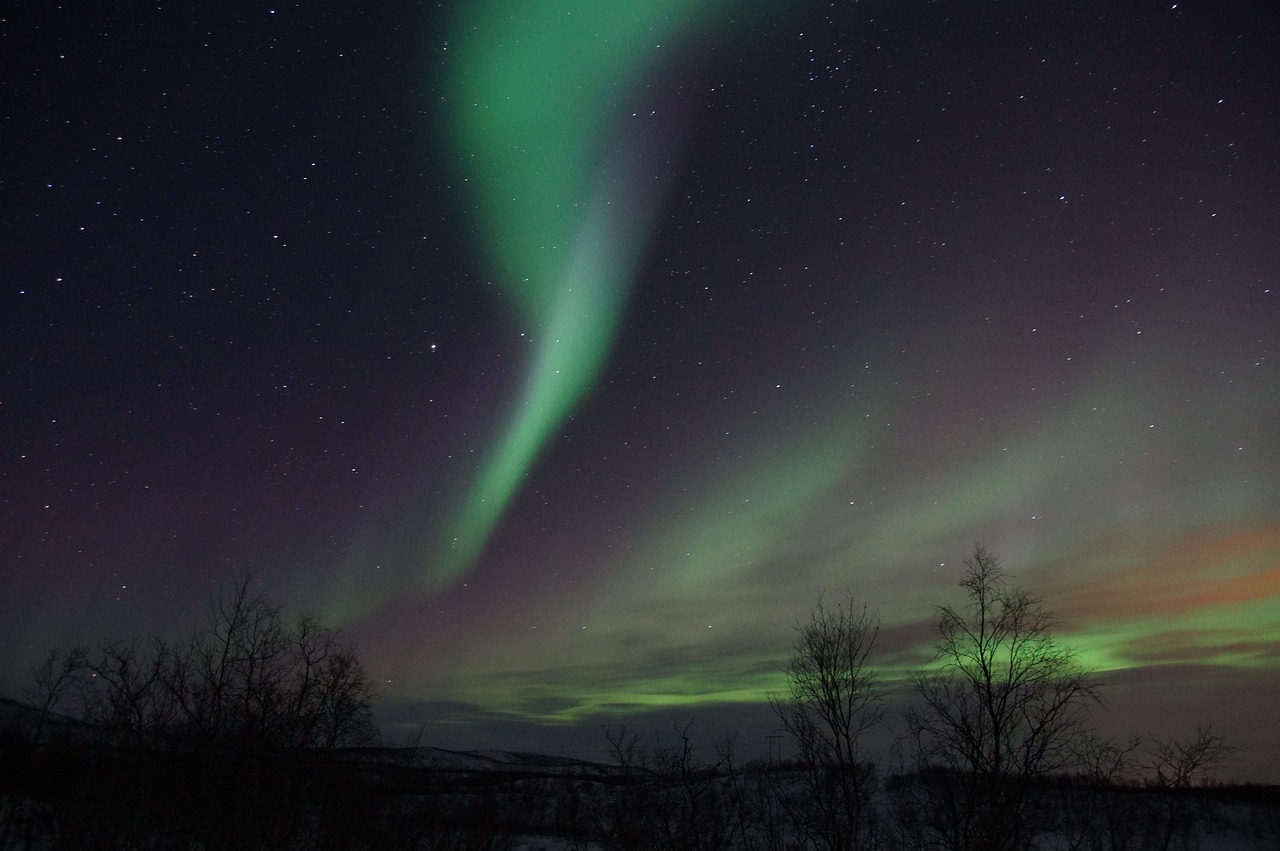
The Sun constantly throws out charged particles. When they meet the Earth's magnetic field they are funnelled towards the poles and strike atoms high in the atmosphere. Those atoms then release light: that is the aurora.
It does not happen just anywhere. It draws a ring around the magnetic pole, the auroral oval, which widens southwards as solar activity rises. Rovaniemi sits at 62 to 63.6° geomagnetic latitude, meaning it is already inside that ring most of the time.
That is the whole point of Lapland: you do not need an exceptional solar storm to see something. Activity rated "moderate" on a global scale is enough to put the oval straight over your head.
Why won't your photo look like what you saw?
This is the worst explained part of the whole subject, and the number one cause of disappointment. Northern lights photos are long exposures: the sensor gathers light for several seconds, the eye does not.
Your retina works in real time and switches to night vision, run by the rods, which read contrast very well and colour very badly. A glow the camera renders in solid green is seen by the eye as pale grey, sometimes faintly greenish.
Local forecast services have formalised that gap. Their hourly verdict does not say "aurora" or "no aurora", it says nothing, camera or naked eye, three distinct levels. One real-time Rovaniemi service puts it plainly: "Kp 2.0 is enough for a camera, but the naked eye needs Kp 3".
In other words, there is a whole category of nights where the aurora is genuinely there, photographable, and invisible to you. It is not a scam, it is physics.
What does a weak aurora really look like?
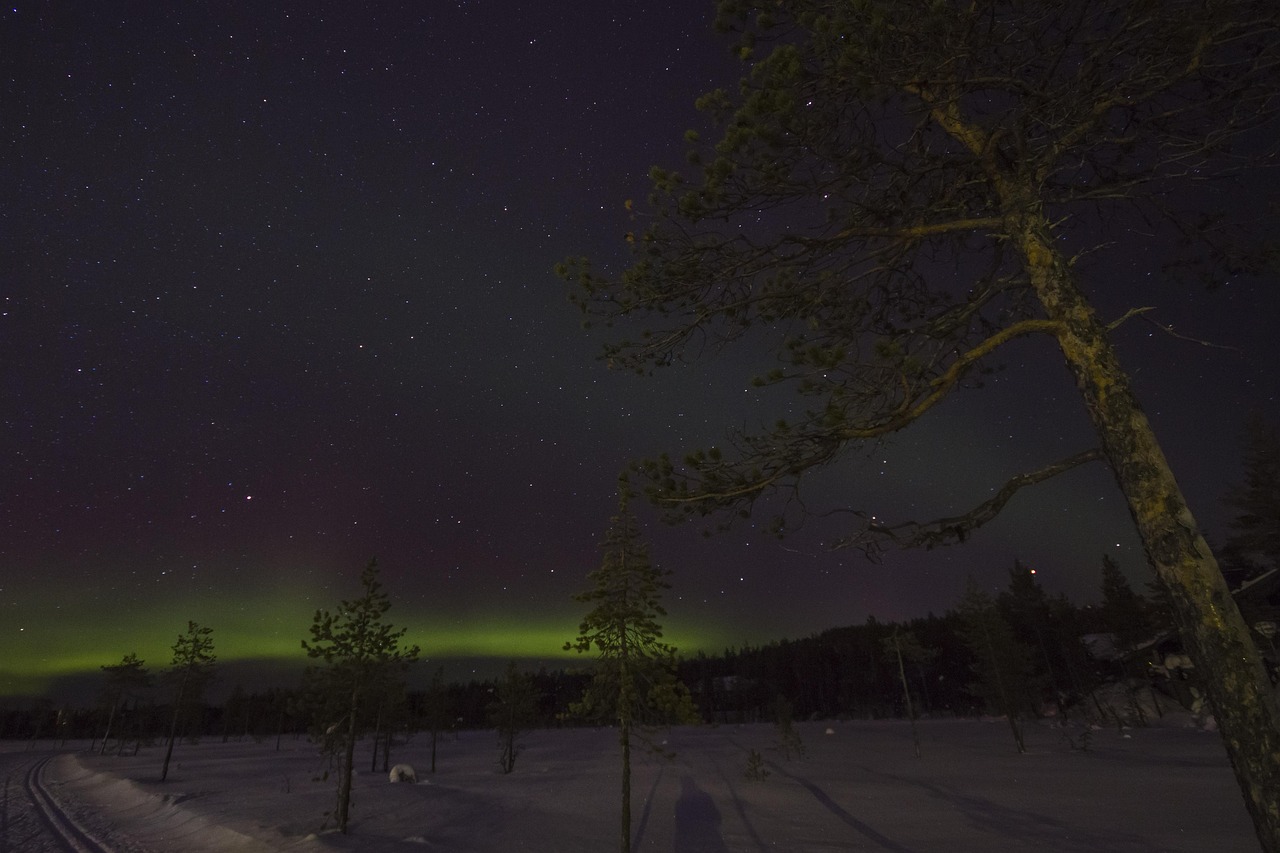
Like a greyish veil, still or nearly still, low across the northern horizon. Plenty of visitors look straight at it without recognising it and take it for a streak of cloud lit up by the town.
The useful reflex is to photograph that veil: if the image comes out green, it is an aurora. It is also how guides settle the question, and often the only way to know.
Colours become visible to the naked eye as the intensity rises, along with the movement. None of the sources consulted gives a threshold expressed in colours, they all reason in Kp: the marker stays Kp 3 for a clear aurora from a dark site, and Kp 4 for curtains that visibly move.
On the night that happens, there is no room for doubt. An active aurora travels, ripples and changes shape in seconds, and the green needs no effort to see. But that is not the most common night.
What Kp index do you need in Rovaniemi?
Borderline. An arc low on the northern horizon is possible if you get away from the town lights.
The last eight windows · Source: NOAA Space Weather Prediction Center, three-hour window
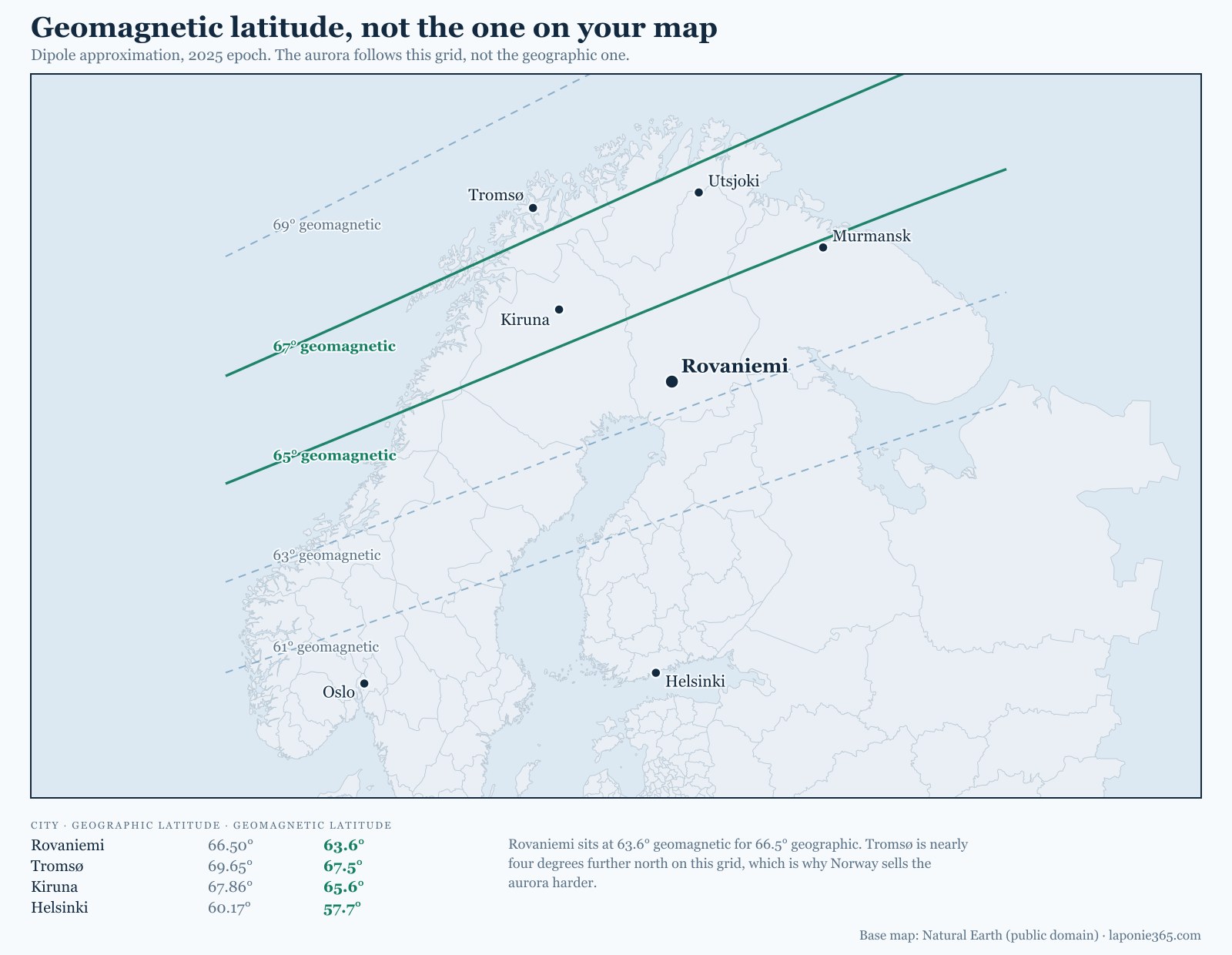
The geomagnetic grid is tilted against the one on your map, and it is the grid the aurora follows. Rovaniemi sits at 63.6° geomagnetic for 66.5° geographic, while Tromsø sits at 67.5°. Nearly four degrees apart, which is why Norway sells the aurora harder than Finland does.
Kp is a 0 to 9 index measuring the disturbance of the Earth's magnetic field, calculated from stations spread across the globe. The higher it climbs, the further south the auroral oval drops and the more intense the aurora.
The sources do not agree on a single figure, and that has to be said: some claim an aurora is visible from Kp 1 to 2, others reckon Rovaniemi needs Kp 3 or even Kp 4 for a reliable sighting. The gap comes from the definition used, naked eye or sensor, town centre or dark site.
| Kp index | What you will see in Rovaniemi |
|---|---|
| Kp 2 | Diffuse glow from a dark site, clear on a sensor, doubtful to the eye |
| Kp 3 | Aurora visible to the naked eye outside town, recognisable structures |
| Kp 4 and above | Bright, moving aurora, visible even from central Rovaniemi |
A model built on 2010-2024 statistics puts the practical visibility threshold at 2.3 for Rovaniemi. Remember the round number: from Kp 3, go out. Below that, go out anyway if the sky is perfectly clear and you are well away from street lights.
What time should you go out?
The useful window is from 10 pm to 2 am, across every source consulted. It matches magnetic midnight, the moment your position passes closest to the axis of the auroral oval.
That does not mean nothing happens before or after. In November and December the night is dark enough for an aurora from late afternoon, and the statistical peaks still cluster late in the evening.
In practice a serious watch lasts two to four hours. Dress for it: standing still at an average of -10.3°C in January is nothing like walking at the same temperature.
Does the moon really get in the way?
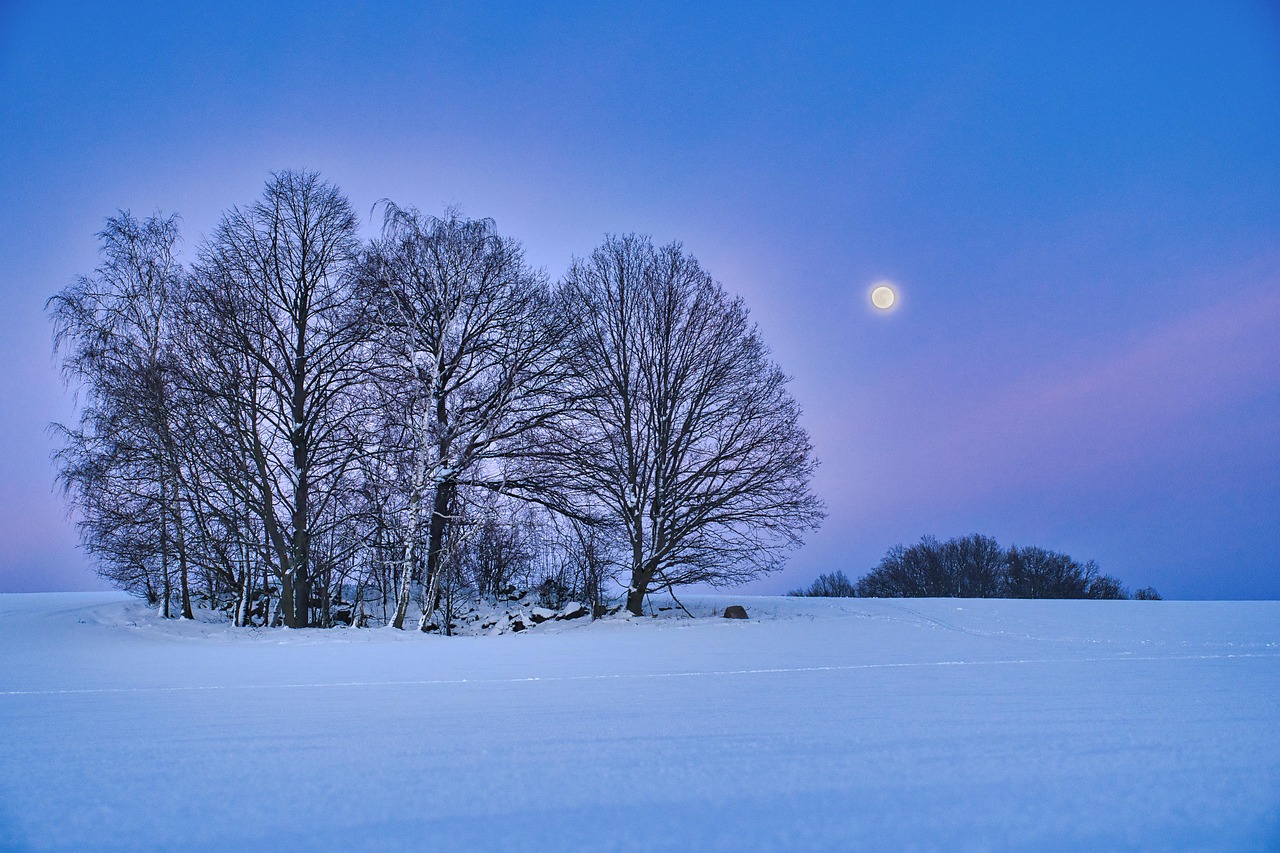
Less than people think, but not nothing. The moon does not wipe out the northern lights, it lowers the contrast of the finest structures, all the more so when it sits high and the snow on the ground bounces its light back.
In practice, a powerful aurora stays very visible under a full moon. What gets lost are the faint arcs and the subtle colours, which is precisely the most common category of night at this latitude.
If you can choose your dates, aim for a new moon or a thin crescent. Otherwise, check in the forecast not only the illumination percentage but the height of the moon hour by hour: a full moon that sets at 1am frees up the end of the night.
Cloud decides everything
It is the number one limiting factor, ahead of the Kp. A fully overcast sky cancels a geomagnetic storm, while a modest Kp under a perfectly clear sky gives a very fine aurora.
And the Rovaniemi aurora season is cloudy. Average cover runs from 68% in March, the clearest month, to 86% in December, the most blocked. November is 85%, February 82%, October 79%.
That parameter, and not solar activity, is what explains the ranking of the months. The month by month detail, with the probabilities and the temperatures, is in our comparison of which month to choose for Lapland.
The practical consequence is decisive: a gap of clear sky 40 km out of town beats a Kp 5 over your hotel. Getting there is the hard part.
The only real lever is mobility: the success rates operators advertise assume you drive out every evening towards the gaps in the cloud, which a visitor without a car cannot do. That is exactly the job of the northern lights tours leaving from Rovaniemi: they track cloud cover live and change spot mid-evening. On a short trip, it is the most effective way to rescue a night that is clouded over in town.
See the northern lights tours →Affiliate links: booking through them supports the site at no extra cost to you.How long will you be waiting outside?
Longer than you imagine. Across the region, the northern lights cross the sky 160 to 200 nights a year, but that figure counts the presence of the phenomenon, not your ability to see it from where you are standing.
The real probability, once cloud and darkness are taken into account, falls between 4.5 and 10% per night depending on the month. A single night on the ground is therefore a bet lost in advance, whatever the season.
Local operators quote 92% success over three nights and 97% over five. Those figures come from the operators themselves and assume you travel out every day: a visitor who stays put in the town centre gets considerably less.
The right target is 3 to 5 nights on the ground, accepting that two of them will give you nothing. With only two nights, a 48 hour cloud front is enough to ruin the trip.
How do you read an aurora forecast?
A global Kp map is close to useless. What you need is a local forecast showing four columns: the expected Kp, the threshold required at that spot, the cloud percentage and the level of darkness.
Good services turn all of that into an hourly verdict along the lines of nothing, camera or naked eye. That is the line to read, not the Kp figure on its own.
Two examples taken from a real-time service dedicated to Rovaniemi make the logic obvious:
- 00:00, Kp 3 out of 3 required, cloud 4%, full darkness, verdict naked eye: this is the window where you go out, no hesitation.
- 02:00, Kp 5, cloud 75%, verdict camera: strong activity but a blocked sky, a risky outing even for photography.
Add a local alert to that. The notification systems used in Lapland rely on cameras and ground sensors, which lets you go out at the right moment without watching models all night. It is more reliable than a three day forecast.
The national service of the Finnish Meteorological Institute publishes probability maps for the whole country, useful as a background reference but too coarse to decide on a given outing.
Do you need a good camera?
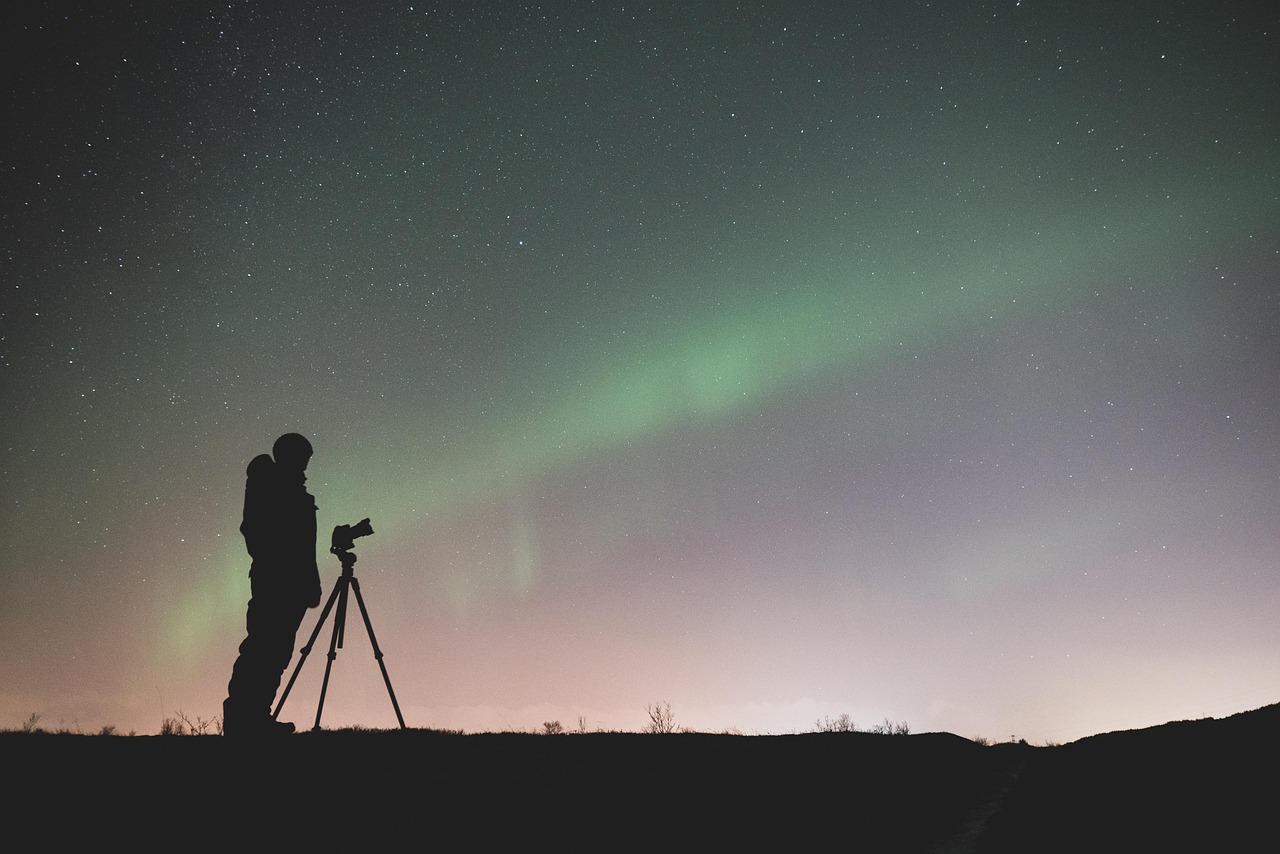
No. You need a tripod. It is the one genuinely non negotiable item, because an exposure of several seconds held at arm's length gives nothing, whatever the camera body.
The research files used for this page do not deal with settings, they deal with forecasting. The values below are therefore the usual starting points, to be adjusted on site according to the intensity.
- Manual mode, otherwise the camera hunts for focus indefinitely.
- Focus at infinity, set by hand on a bright star before the wait begins.
- Widest possible aperture, f/2.8 or faster if the lens allows it.
- ISO 1600 to 3200 depending on how much noise your sensor can take.
- Exposure of 2 to 15 seconds: short if the aurora is moving, otherwise the curtains turn into green mush.
- Two second self timer to avoid shake as the shutter fires.
A recent smartphone does very well, and often better than a badly set up DSLR. Its night mode stacks several short frames and corrects micro movements, which partly makes up for having no tripod. A 20 € tabletop tripod still changes everything.
One last, mundane point: the cold empties batteries in an hour. Keep the spares warm against your body, in an inside pocket, and bring them out one at a time.
Is 2026 still a good year?
Yes, and it may well be the last at this level. The Sun follows a cycle of roughly eleven years, and we are in cycle 25, whose maximum was declared by NASA and NOAA in October 2024.
That cycle has comfortably beaten the forecasts: the smoothed sunspot number reached 299 sunspots in January 2026, against roughly 115 predicted at the outset. It is the most active cycle in more than twenty years.
The maximum has passed, but activity remains strong, with storms reaching Kp 9- in November 2025 and January 2026. Analyses place the next minimum around 2030, with a gradual decline from now on.
At this latitude that counts for less than elsewhere: even in quiet periods the auroral oval passes over Lapland regularly. But a trip in 2026 or 2027 still catches the end of the plateau.
What to remember before you book
- Allow 3 to 5 nights, never just one. It is the variable that weighs most heavily on your chances.
- Aim for from October to March, with March in front because of the cloud. The wider season runs from late August to early April.
- Go out from 10 pm to 2 am, and accept two to four hours of waiting per outing.
- Get away from the lights. The choice of site counts as much as the Kp, see our page on where to watch the northern lights in Rovaniemi.
- Do not travel without a plan B. A trip built solely around the northern lights can end in nothing at all, that is simple maths.
That last point deserves to be taken seriously. Fill your days with things that do not depend on the sky, and keep the northern lights as a bonus: it is the only way not to go home disappointed.
To build that programme, look at the temperatures month by month so you know how to dress during the wait, and our estimate of what a trip costs.
If the idea is to watch from your bed, our comparison of glass igloos in Lapland says what those nights are really worth, and at what price. For more conventional accommodation, compare rates on places to stay in Rovaniemi.
Sources
WeatherAway 2010-2024 model for the nightly probabilities and the monthly cloud cover. AuroraTonight, PolarForecast, AuroraTracker and Orbital Radar for the local Kp thresholds, the time windows, the camera and naked eye verdicts and the success rates by number of nights.
NASA, NOAA and STCE, May 2026 review, for tracking solar cycle 25. Finnish Meteorological Institute for the temperatures and for the national aurora forecast service. Data verified in August 2026.
Frequently asked questions
Why aren't the northern lights I can see green?
What Kp index do you need to see the northern lights in Rovaniemi?
What time should you go out to see the northern lights?
How many nights do you need to stay to see the northern lights?
Does a full moon stop you seeing the northern lights?
Do you need a professional camera to photograph the northern lights?
Can you see the northern lights in summer in Lapland?
Erik Lindqvist
Based in Rovaniemi, Erik knows the difference between a working reindeer farm and a show staged for coach parties. He writes from the ground, not from a press release.