When to visit Lapland: the twelve months compared
December takes the bookings, March takes the advantages. All twelve months compared on real snow depth, daylight and the odds of an aurora.
The usual answer is “December, for Santa and the polar night”. It is also the week when flights and hotels hit their highest price of the year.
The Finnish Meteorological Institute records tell a different story. December is the month when the snow cover is at its thinnest of the whole winter, when the sky is at its most overcast, and when the northern lights are least visible.
This page compares the twelve months on four things you can check: snow on the ground, daylight hours, the probability of an aurora and how busy it gets. By the end you will know which month fits your trip.
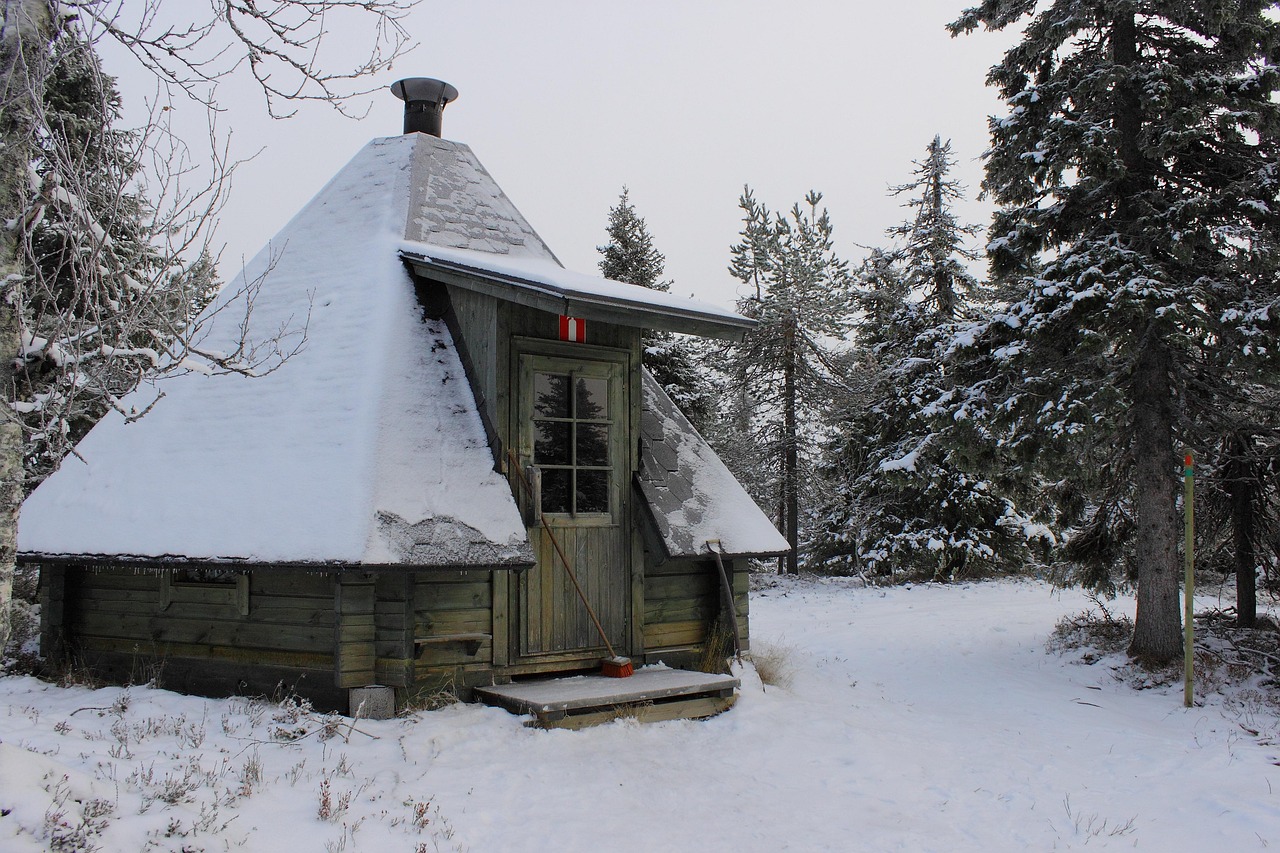
The table the brochures leave out
Temperatures and snow depths come from the Finnish Meteorological Institute station at Rovaniemi (number 101920), on the 1991-2020 normals. The aurora probabilities come from a model that combines geomagnetic activity, darkness and cloud cover over the period 2010-2024.
| Month | Average temp. | Snow on ground | Daylight on the 1st | Aurora per night |
|---|---|---|---|---|
| January | -10.3°C | 61 cm | 2h 44m | 4.7% |
| February | -10.2°C | 75 cm | 6h 22m | 6.2% |
| March | -5.6°C | 84 cm | 9h 53m | 10% |
| April | +0.1°C | 82 cm | 13h 02m | low, nights too bright |
| May | +6.5°C | 33 cm | 17h 03m | none |
| June | +12.5°C | 0 cm | 22h 06m | none |
| July | 15.6°C | 0 cm | 24h | none |
| August | +13.1°C | 0 cm | 18h 56m | season starting |
| September | +7.7°C | 1 cm | 14h 56m | 6.6% |
| October | +0.8°C | 8 cm | 11h 20m | 6.9% |
| November | -4.4°C | 23 cm | 7h 31m | 4.9% |
| December | -7.7°C | 41 cm | 3h 47m | 4.5% |
Read the March row, then the December one. March is two degrees warmer, carries twice as much snow, gives three times as much daylight and doubles your chances of an aurora.
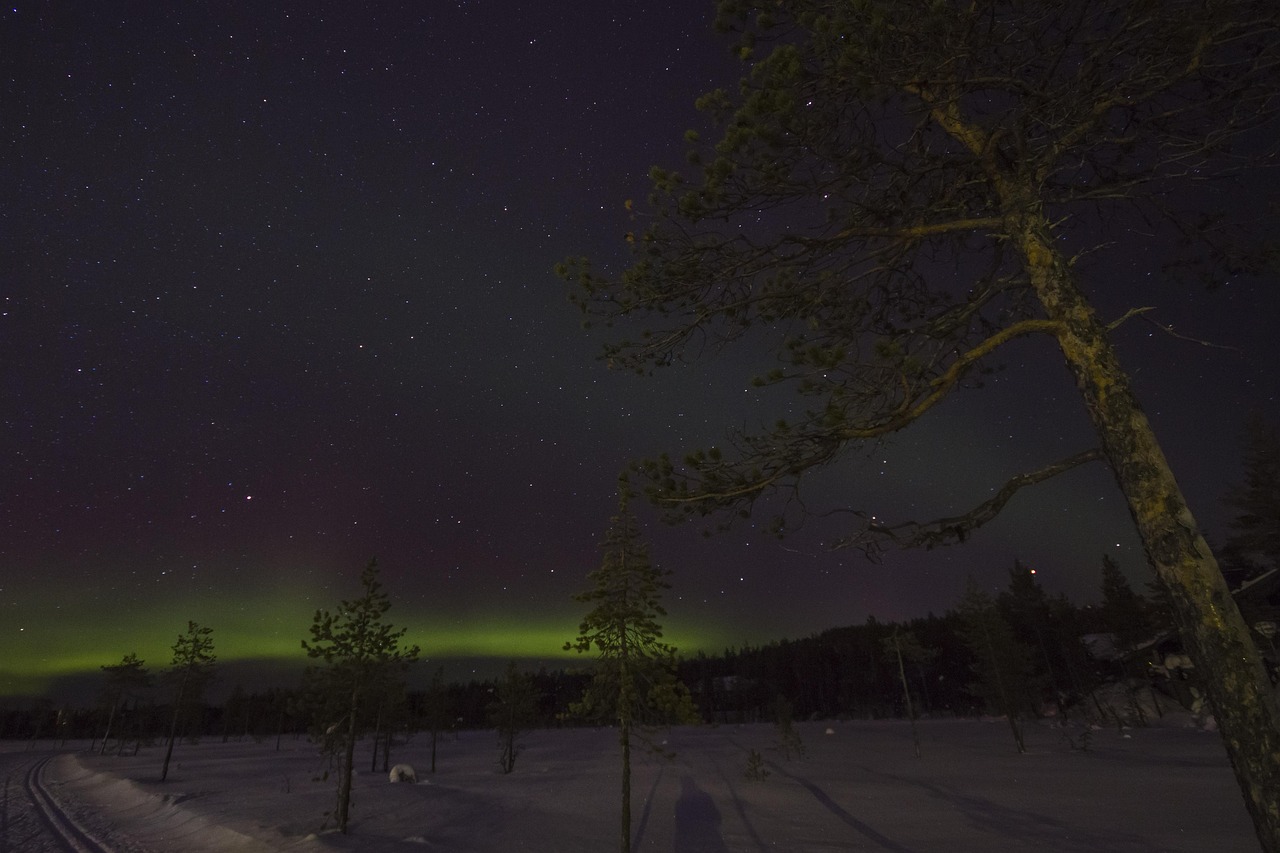
Why does March double your aurora odds?
Instinct says that the longer the night, the more aurorae you see. That holds for the darkness, but not for the final result, because the sky also has to be clear.
Cloud cover over Rovaniemi reaches 86% in December, against 68% in March. On this one point, midwinter is the most closed-in stretch of the year.
On top of that comes a well documented effect: geomagnetic activity peaks statistically around the equinoxes, so in September and October, and in February and March. The two effects pull in the same direction.
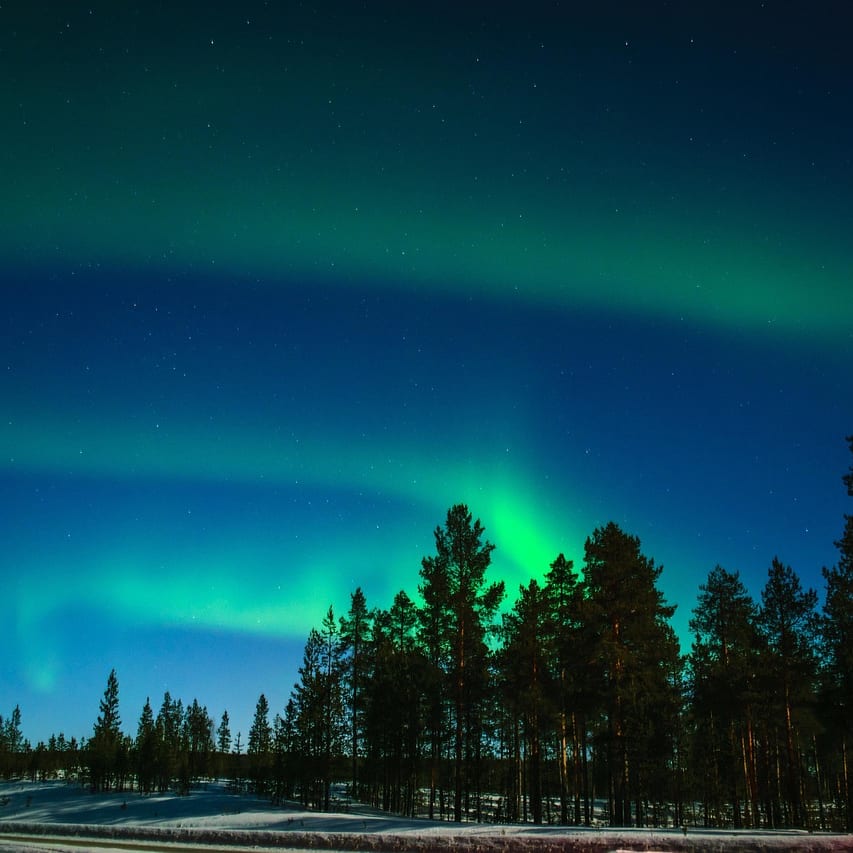
The result fits in one line. A March night gives you 10% odds of seeing an aurora, a December night gives 4.5%.
The snow is deepest in March, not at Christmas
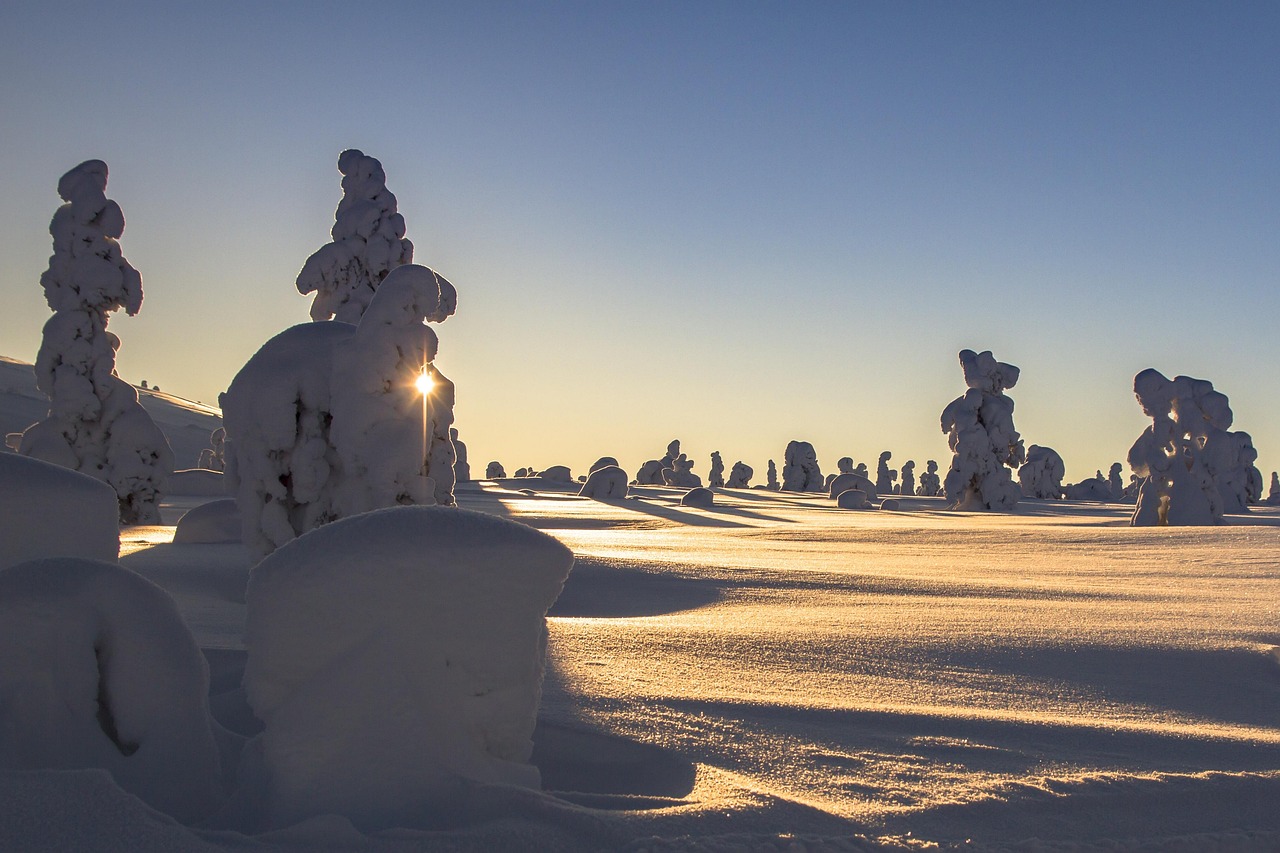
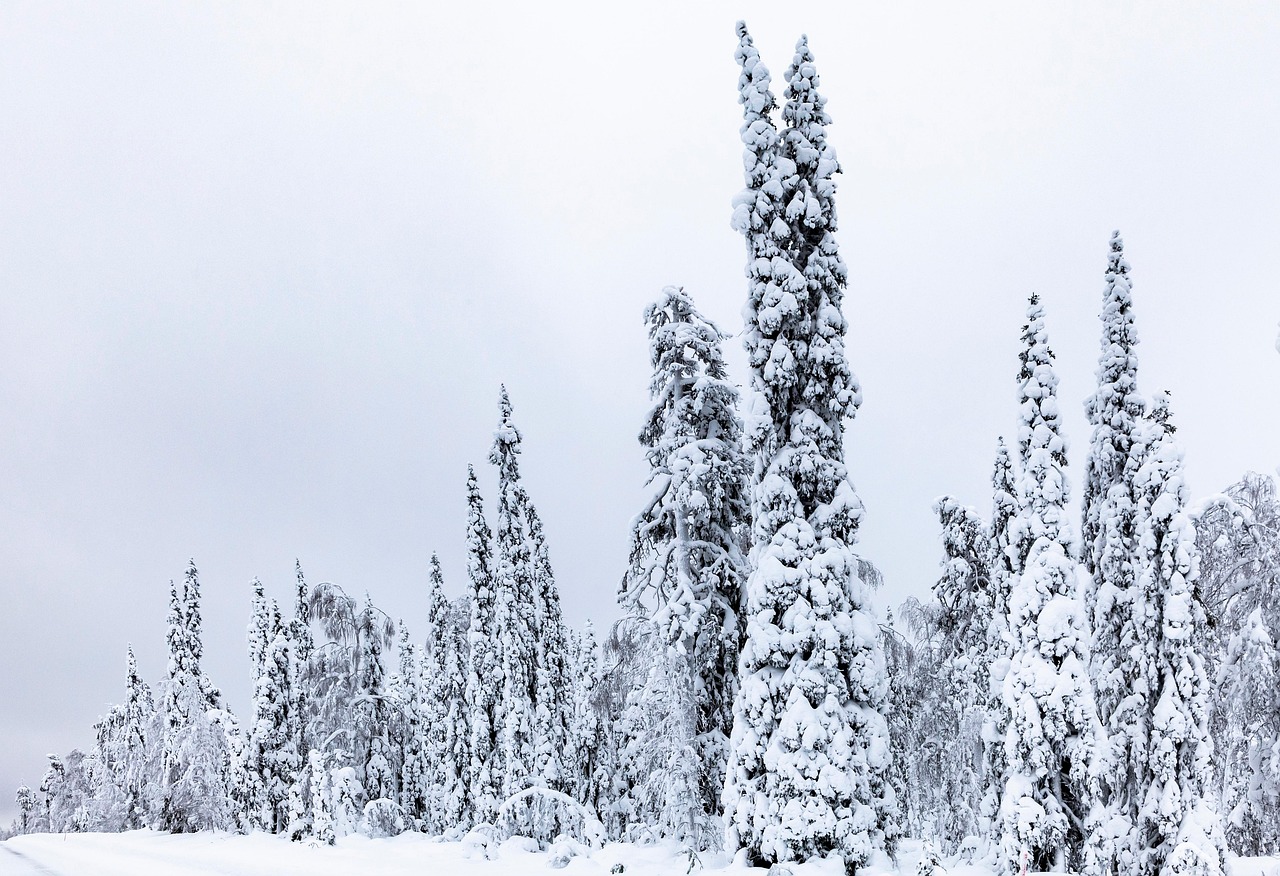
This is the point that surprises travellers most. Snow starts to hold on the ground in early November, settles for good in late November or early December, then keeps building up all winter.
The maximum comes in March, at 84 cm of average maximum depth. In December the cover is still only 41 cm, which is half of that.
April stays almost as snowy, at 82 cm, even though temperatures climb back above freezing. The melt speeds up in May, and the ground is usually clear by June.
For a dog sled or a snowmobile, that changes a great deal. Late-winter trails are far better covered than the ones you get at Christmas.
Rovaniemi's polar night lasts two days, not two months
Plenty of travellers picture an entire winter without sunlight. That is true further north, but not in Rovaniemi.
The city sits on the Arctic Circle, at 66°33' of latitude. At that exact position the sun stays below the horizon for only about two days, on on 21 and 22 December.
A comparison makes it concrete. The polar night lasts 16 days at Ylläs, a little higher up, and 52 days at Utsjoki, at the very top of Finland.
Even during those two days it is not dark throughout. The sun passes just under the horizon around midday and produces the famous kaamos, a deep blue light that the snow throws back for several hours.
How many hours of daylight, month by month?
Here are sunrise and sunset on the first day of each month. Between two lines the day length shifts fast: in March, Rovaniemi gains around seven minutes of light a day.
- 1 January: 10:50 to 13:43, so 2h 44m of daylight
- 1 February: 09:20 to 15:43, so 6h 22m
- 1 March: 07:33 to 17:27, so 9h 53m
- 1 April: 06:17 to 19:19, so 13h 02m
- 1 May: 04:42 to 21:45, so 17h 03m
- 1 June: 02:12 to 00:18 the following morning, so 22h 06m
- 1 July: polar day, the sun does not set
- 1 August: 03:55 to 22:51, so 18h 56m
- 1 September: 05:49 to 20:45, so 14h 56m
- 1 October: 07:27 to 18:47, so 11h 20m
- 1 November: 08:13 to 15:45, so 7h 31m
- 1 December: 10:11 to 13:58, so 3h 47m
Three hours of daylight in December is enough for one activity, rarely for two. That is a scheduling constraint as much as a question of atmosphere.
Lapland has a summer, and it is like nowhere else
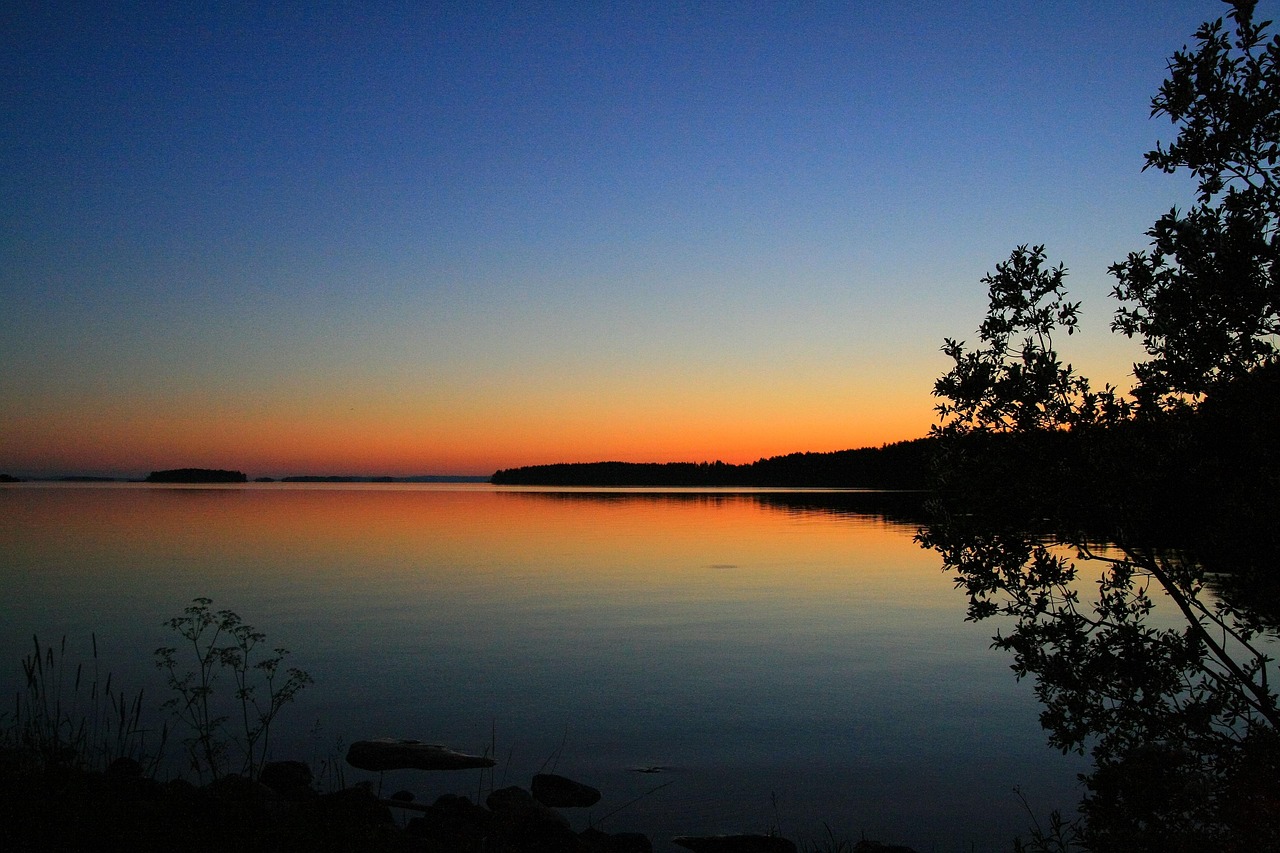
The midnight sun runs from 7 June to 6 July in Rovaniemi, with no sunset at all across that window. The white nights stretch wider, from late May to early August.
Temperatures are milder than people expect, with 15.6°C on average in July and highs around 20°C. The station's all-time record is 32.1°C, set in 1960.
Prices drop, rooms are available, and the activities switch to hiking, canoeing and berry picking. The trade-off: no aurora is visible, because the sky never gets dark enough.
How many nights do you need to see the northern lights?
With 4.5% to 10% odds per night depending on the month, a single night on the ground is a bet you have already lost. The maths argues for a stay of several nights.
Local operators quote around 92% success over three nights and more than 97% over five. Read those figures with care: they come from the operators themselves, and they assume you drive out every evening towards the gaps in the cloud.
A visitor who stays in the town centre, under the street lighting, gets considerably less. Treat three nights as a sensible minimum and five as your safety margin on a one-off trip.
What really makes the difference: the success rates operators quote assume you move every evening towards the clear-sky gaps, which a visitor without a car cannot do. That is the job of the northern lights tours leaving from Rovaniemi: they track cloud cover live and change spot mid-evening. On a short stay, it is the only way to rescue a night clouded over in town.
See the northern lights tours →Affiliate links: booking through them supports the site at no extra cost to you.The one good reason to come in December
Nothing above says December is a bad choice. It simply says that December is not the month you pick for the snow or for the northern lights.
December is the month you pick for one thing the others cannot offer: the Christmas atmosphere, Santa Claus Village in full season, and children you want to give exactly that moment to. That is a perfectly good reason.
The point is to name it. A couple who come for the aurora and book Christmas week pay top price for the worst statistics of the year.
Which month suits your trip?
- You are coming for the northern lights: March first, then February, October and September. Avoid December and January.
- You are coming with children for Santa: December, accepting the price and the short days. The first two weeks are quieter than Christmas week.
- You are coming for snow activities: February to April, when the cover is at its deepest and the day is long enough. This is the stretch when husky sledding tours and snowmobile safaris run on the best covered trails.
- You want the best value in winter: January after the 6th, or late March, the two troughs between booking peaks. Compare rates across both windows before you commit to anything, because the gap with Christmas week runs into hundreds of euros on accommodation in Rovaniemi.
- You want Lapland without the cold: June to August, for the midnight sun, the hiking and prices that are in another league entirely.
To go further, read the detail of temperatures month by month, the comparison of ways of getting to Lapland and our estimate of what a trip actually costs. If you are still weighing up the destination itself, start with where Lapland is.
Sources
Finnish Meteorological Institute, Rovaniemi station 101920, 1991-2020 normals, for temperatures and snow depths. WeatherAway model 2010-2024 for aurora probabilities and cloud cover. Safartica and Visit Rovaniemi for the length of the polar night. Sunsetsunrisetoday and Husky Park for sunrise and sunset times. Data checked in August 2026.
Frequently asked questions
What is the best month to see the northern lights in Lapland?
Is it dark all day in Lapland in winter?
Is there more snow at Christmas or in spring?
How many nights should you stay to have a chance of seeing an aurora?
Can you visit Lapland in summer?
What is the lowest temperature ever recorded in Rovaniemi?
Erik Lindqvist
Based in Rovaniemi, Erik knows the difference between a working reindeer farm and a show staged for coach parties. He writes from the ground, not from a press release.